
How to put data access into practice
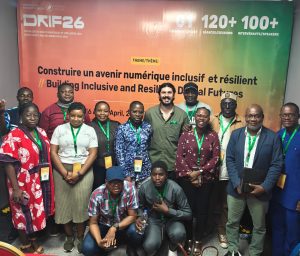
Organised by the Alliance, a vibrant panel assessed how to implement access to data across Africa on 16 April, 2026.
The discussion took place at the Digital Rights and Inclusion Forum in Abidjan, convened by Paradigm Initiative and the Coalition Ivoirienne des Défenseurs des Droits Humains (CIDDH).
The context is the Alliance’s ongoing work towards achieving continent-wide African Guidelines on Access to Data.
Panel moderator, Mpho Moyo of Research ICT Africa, set the scene noting; “Data is the baseline for governance”. Without access, she said, there cannot be informed and accountable governance.
Kimal Harvey of the Legal Resources Centre recognised that the Guidelines themselves will be non-binding – even after final adoption later this year by the African Commission on Human and Peoples’ Rights.
He proposed to build up legal backing for the instrument through:
• Engaging parliamentarians and advocating for relevant law reforms in line with the Guidelines;
• Doing strategic litigation to explicitly get the Guidelines cited into case jurisprudence.
Kehinde Adegboyega of Human Rights Journalists Network Nigeria highlighted how journalists can use the Guidelines to get hold of data which some interests would prefer to keep hidden.
He also spoke of the need for reforming overly restrictive laws like Official Secrets acts working at cross purposes to data access.
An audience member from Niger, signalled that even though some data is already public, journalists could still get into trouble for publishing it. The panel responded that the Guidelines do specify protections for disclosures.
From the Association for Progressive Communications, Peace Amuge urged that data access must be gender disaggregated. “This is key to addressing digital divides, and for empowering women and marginalised communities,” she said. The issues of accessibility, language and data bias will need to be addressed in implementing the Guidelines.
A further point from the audience described the problem of data collection by humanitarian agencies, which raised expectations yet without the communities involved getting any feedback. The panel responded that the Guidelines were based on human rights, including those of the data subject, which include the right to refuse data collection, storage, processing or use, and that data operations needed to be transparent.
Article 19’s Alfred Bulakali asked the audience to identify executive institutions that could advance the Guidelines. Amongst the responses were: commissions dedicated to access to Information, data protection, and media /telecoms regulation, as well as entities such as national statistics agencies and elections management bodies.
He assessed that: “The main gap is that these institutions don’t talk to each other, and likewise many laws are not interoperable or consistent with access to data principles.” Bulakali further observed that many countries have a colonial heritage that is contrary to disclosure, and not linked to human rights and accountability.
Mpho Moyo challenged the audience, asking: “How do we enable and improve co-ordination around access to data, when countries say they don’t have funding”. In response, one audience member spoke about the importance of assessing who would benefit from data access, and if revenue-sharing possibilities were possible.
Kimal Harvey urged that data access not be isolated from policy on data infrastructure, pointing to the huge water and energy demands from data centres which put great stress on African communities.