

Access to data essential for environmental transparency in Africa
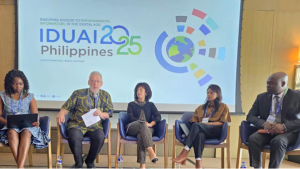
The African Alliance on Access to Data hosted a panel discussion at UNESCO’s annual conference to mark the International Day for Universal Access to Information (IDUAI), focusing on Digital Tools and Big Data for Environmental Transparency in Africa.
The theme for the 2025 IDUAI global conference held at the end of September in Manila in the Philippines was Ensuring Access to Environmental Information in the Digital Age.
The session, moderated by AAAD stalwart Hlengiwe Dube from the Centre for Human Rights at the University of Pretoria, examined how African and global stakeholders can collaborate to enhance environmental accountability through digital innovation, shared practical examples of technologies and platforms advancing environmental transparency and noted challenges such as the digital divide, data ethics, and the sustainability of civic tech.
In her introductory remarks, Dube pointed out that access to timely, accurate, and actionable environmental data is essential for the protection of the rights of communities, ensuring accountability, and advancing sustainable development, provided that issues such as data governance, inclusion, capacity, and ethical use of data are attended to.
Hon. Ourveena Geereesha Topsy-Sonoo, a member of the African Commission on Human and Peoples’ Rights and Special Rapporteur on Freedom of Expression and Access to Information in Africa, in an online address from Mauritius explained that the work currently being done with the help of the AAAD, to develop a set of access to data guidelines in execution of ACHPR Resolution 620, will help with promoting environmental accountability in Africa.
Pria Chetty, from Research ICT Africa, spoke about the importance of policy and regulatory frameworks to support the use of digital tools and big data, and how digital tools can be leveraged to promote environmental transparency.
Stephen Moore, from the Centre for Artificial Intelligence Research in Ghana focused on how AI and machine learning can be leveraged to monitor and predict environmental challenges, and the risks and ethical considerations when deploying AI in the environmental context.
Khouloud Abejja from the Moroccan Digital Development Agency explained the role that her government played in promoting open environmental data for public and private use and the incorporation of environmental data into its national digital development strategy.
Izak Minnaar from the South African National Editors’ Forum (South Africa) described how journalists use data for environmental investigations – such as Oxpeckers – and factual reporting. Access to data is also important for media policy work, such as in negotiations with competition authorities and the digital platforms to determine the value of news.
The session was organised with the support from UNESCO.